Key Takeaways
- Video brochures combine motion, sound, and print to create stronger attention than standard print brochure formats
- Engagement rates with video brochure campaigns often outperform traditional print by a wide margin
- Marketing directors are shifting budgets toward brochure with video formats for high-value campaigns
- Video screen brochure formats deliver stronger recall and response compared to static print brochure designs
- ROI increases when video brochure campaigns target premium audiences and decision-makers
- Traditional print brochure materials still have value but work best when supported by video-driven messaging
- Industries such as real estate, automotive, healthcare, and finance consistently report higher campaign success using video brochures
TLDR
Traditional print brochures still serve a purpose, but video brochures consistently deliver stronger engagement rates and higher response levels.
Marketing directors seeking measurable performance improvements are increasingly choosing brochure with video formats to drive campaign results.
Why This Comparison Matters More Than Ever
Marketing noise has never been louder.
Email inboxes overflow.
Printed materials compete for attention against screens and digital content.
Marketing directors face pressure to prove results.
Budgets must generate measurable engagement.
Campaign performance must justify every dollar spent.
Traditional print brochure campaigns once dominated marketing strategies.
They still hold value today.
But expectations have changed.
Audiences now expect motion, sound, and visual storytelling.
Static content struggles to compete with video-driven experiences.
This shift explains why more organizations now evaluate video brochures vs traditional brochure performance using real campaign data.
Understanding the difference helps marketing leaders choose the right format for future campaigns.
What Is a Video Brochure?
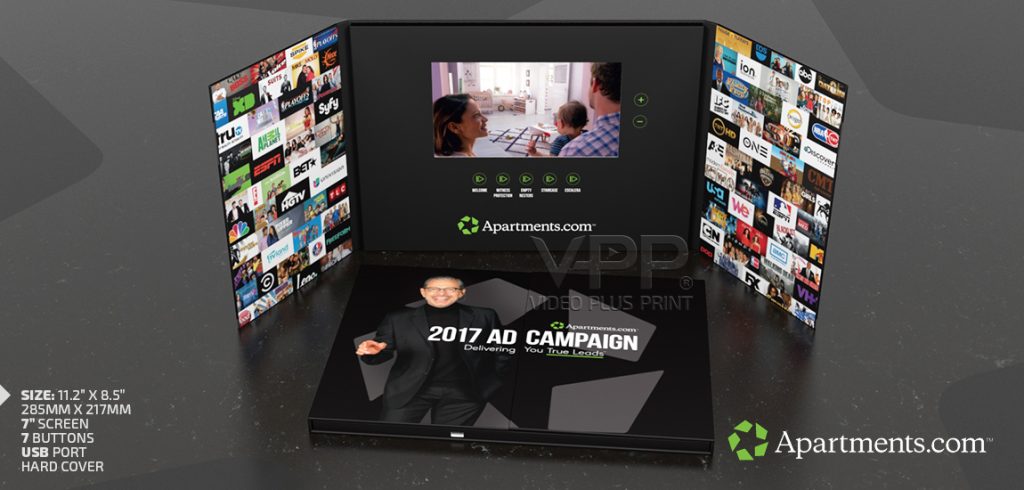
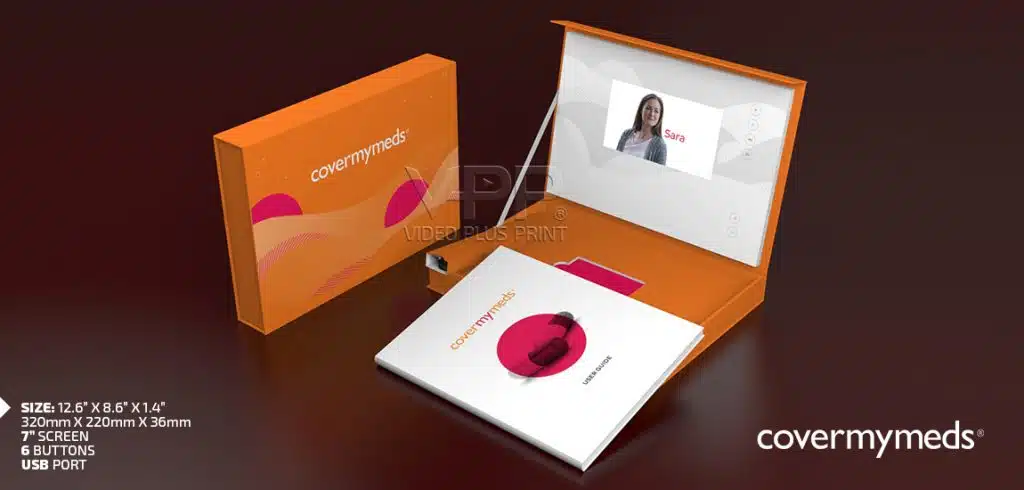
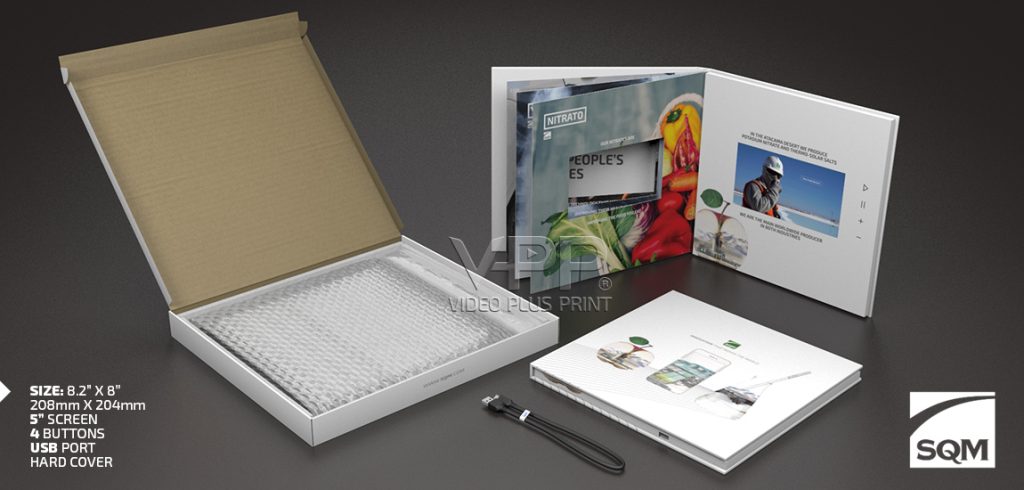
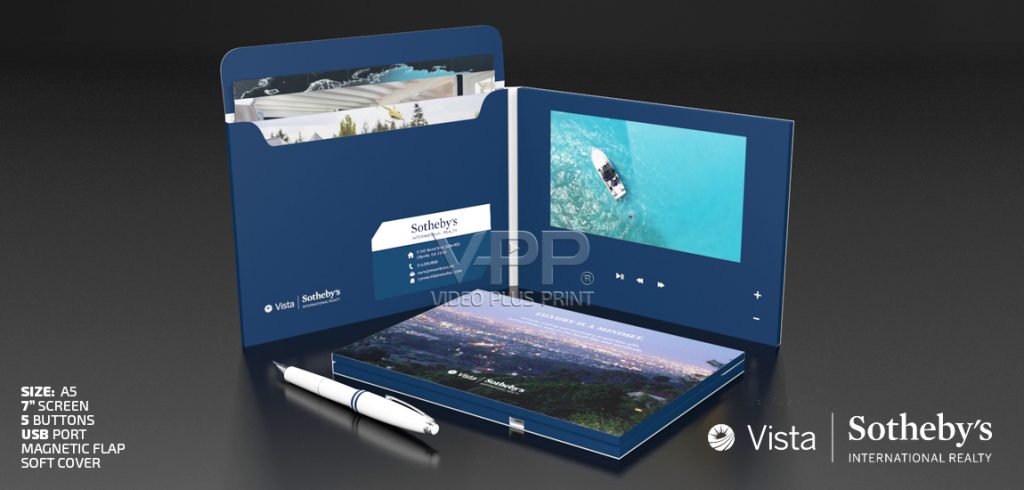
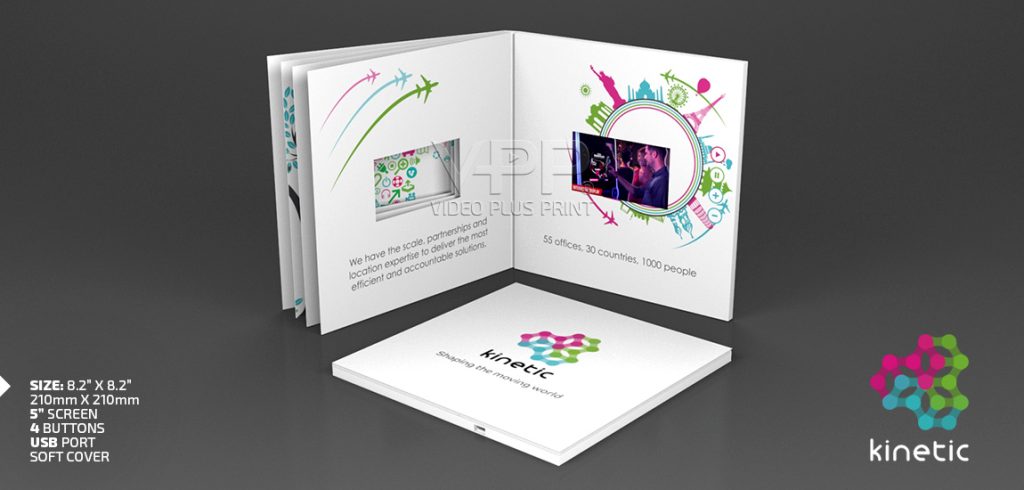
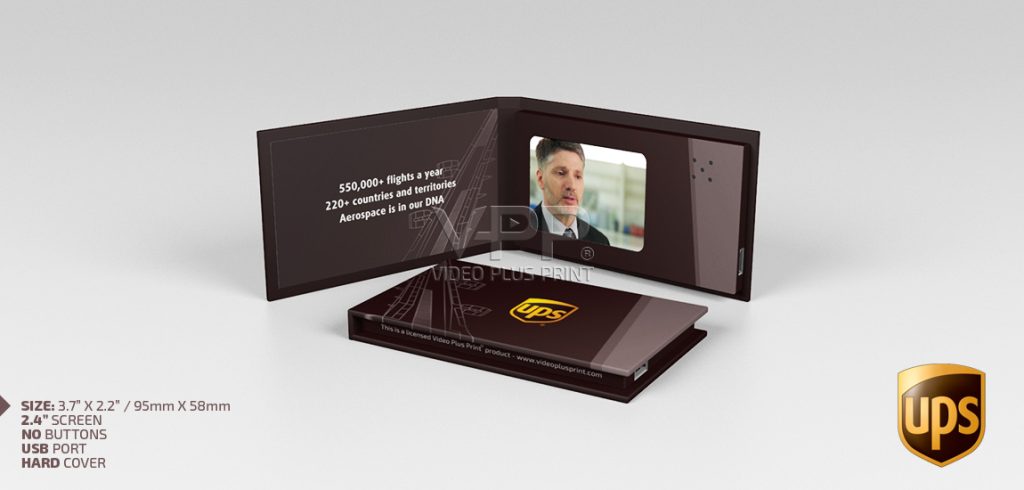
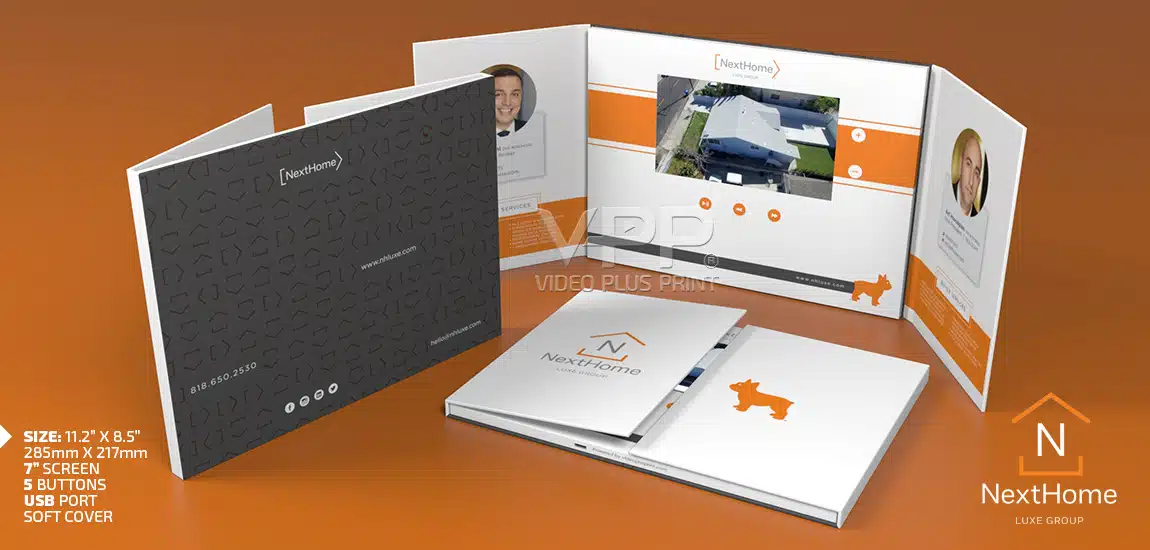
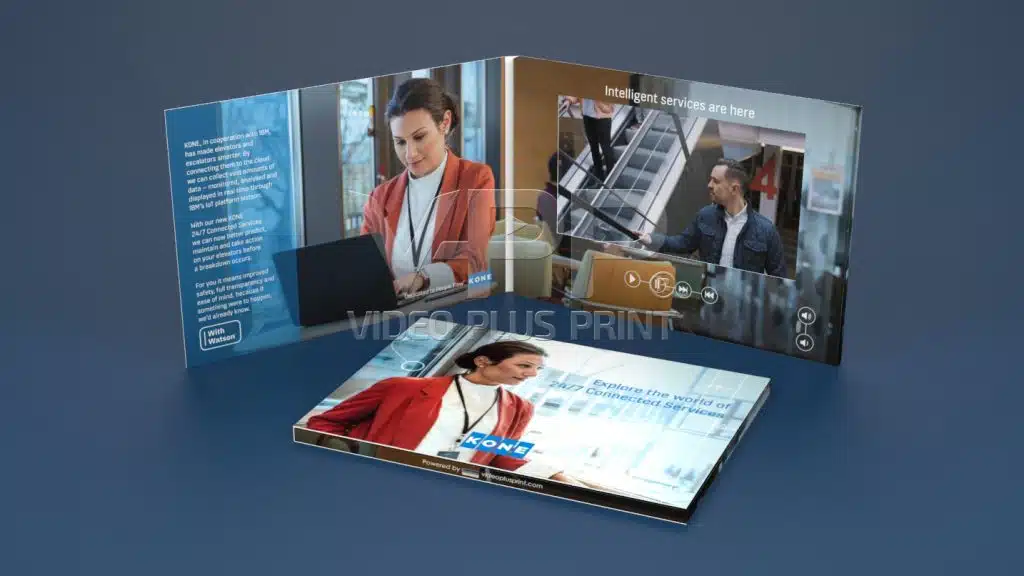
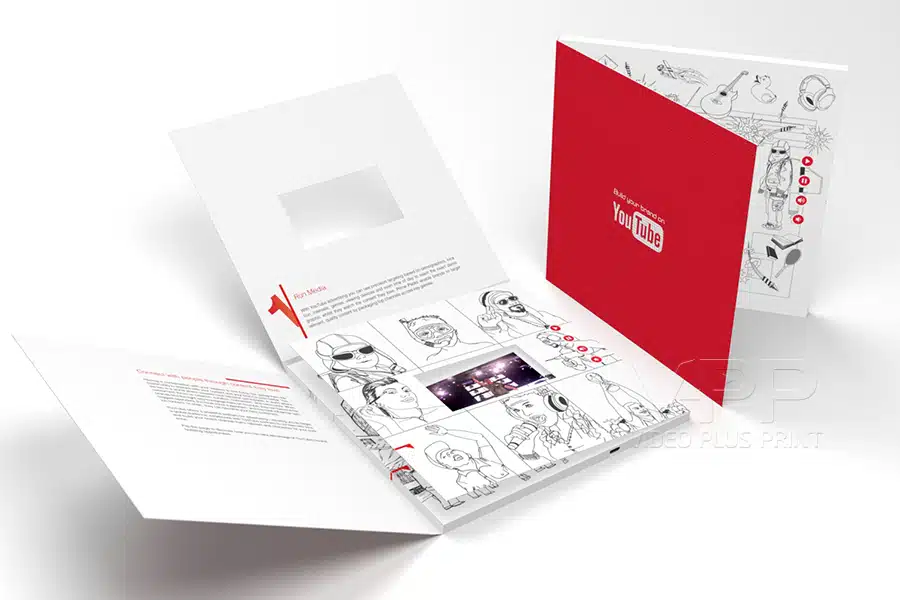
A video brochure combines printed material with a built-in LCD video screen.
This format delivers printed messaging alongside video content that plays automatically when opened.
A typical video brochure includes:
- A high-quality printed cover
- A built-in LCD screen
- Internal memory storage
- Rechargeable battery
- Speaker system
- Control buttons
When opened, the video begins playing instantly.
This creates an immersive experience that traditional print brochure formats cannot match.
Many marketing teams use video screen brochure designs to deliver product demonstrations, brand storytelling, and promotional content.
This format bridges physical marketing and digital storytelling in one piece.
What Is a Traditional Print Brochure?
A traditional print brochure relies on static visuals and written messaging.
It delivers brand information through images, layout, and typography.
Most print brochure formats include:
- Folded paper layouts
- Printed images and graphics
- Product descriptions
- Contact information
- Promotional messaging
Traditional brochures remain cost-effective and widely used.
They distribute easily at events and through mail campaigns.
However, they rely entirely on visual reading.
They lack movement, sound, and emotional storytelling.
This limitation plays a major role in modern engagement performance.
Video Brochure vs Traditional Brochure Engagement Rates
Engagement rates represent one of the most important campaign metrics.
They reveal how long audiences interact with marketing materials.
They also indicate how memorable messaging becomes.
Research across multiple industries shows clear patterns.
Typical traditional print brochure engagement includes:
- Short viewing times
- Limited interaction
- Low repeat viewing
By comparison, video brochure engagement rates often show:
- Longer viewing duration
- Higher emotional response
- Increased content retention
- Stronger brand recall
Many campaigns report viewer retention levels approaching 80 to 95 percent when video content delivers clear messaging.
Static print brochure engagement typically declines after the first scan.
This difference explains why video-based formats outperform traditional print in competitive markets.
The Science Behind Engagement and Memory
Human memory responds strongly to motion and sound.
Visual storytelling activates multiple senses.
Traditional print activates only one sense.
Video activates several.
Studies consistently show:
- Video improves message retention significantly
- Motion increases emotional response
- Audio enhances recall accuracy
These factors combine to create stronger campaign impact.
Marketing directors focusing on brand awareness often see measurable improvements when switching to lcd brochure vs print brochure campaigns.
Video Brochure vs Traditional Print Performance Data
Performance data provides measurable insight into campaign outcomes.
Several metrics help compare brochure formats:
- Engagement rates
- Response rates
- Conversion rates
- Lead quality
- Brand recall
Campaign data frequently shows:
Traditional print brochure campaigns:
- Moderate engagement
- Lower response rates
- Limited measurable interaction
Video brochure marketing campaign results:
- Higher viewer attention
- Increased response rates
- Improved conversion metrics
- Stronger brand recall
These performance trends explain the rising adoption of brochure with video formats across industries.
How Video Brochure Marketing Campaign Results Improve Response Rates
Response rates determine campaign success.
Higher responses lead to stronger return on investment.
Video brochure campaigns increase response rates because:
They capture attention immediately.
They deliver complex messages clearly.
They create emotional connection.
Common response improvements include:
- Increased call-back rates
- More meeting requests
- Higher event attendance
- Improved product launch results
Traditional print brochure campaigns still generate responses.
However, they often struggle to stand out in crowded environments.
Video brochure campaigns create memorable impressions that encourage action.
Comparing ROI: LCD Brochure vs Print Brochure ROI
Return on investment remains a critical decision factor.
Marketing directors evaluate:
Cost per lead
Cost per response
Campaign revenue impact
Traditional print brochure ROI depends on:
- Printing costs
- Distribution costs
- Response rates
Video brochure ROI depends on:
- Unit cost
- Audience targeting
- Response quality
Although video brochures cost more per unit, they often generate higher-value leads.
This leads to:
- Lower cost per qualified lead
- Higher conversion value
- Improved campaign profitability
Many marketing teams discover that premium presentation materials produce premium results.
When Traditional Print Brochure Campaigns Still Make Sense
Traditional print brochure materials remain valuable in several situations.
They work well when:
- Budgets remain limited
- Campaign volume is extremely high
- Messaging remains simple
- Distribution occurs in bulk
Print brochures still support brand awareness campaigns effectively.
They also complement digital marketing strategies.
However, high-value audiences often expect more engaging formats.
That expectation drives interest in video brochures.
When Video Brochure Campaigns Deliver the Best Results
Video brochure campaigns perform strongest when targeting:
High-value prospects
Premium clients
Decision-makers
VIP audiences
They deliver strong performance in:
Product launches
Investor presentations
Direct mail campaigns
Trade show promotions
Luxury marketing initiatives
Marketing directors managing complex messaging benefit most from video-driven storytelling.
Industry Use Cases That Demonstrate Strong Results
Different industries adopt video brochures for different reasons.
Real Estate
Agents use video brochures to showcase property tours.
This improves listing engagement and appointment requests.
Automotive
Manufacturers launch new vehicles using video brochure campaigns.
These campaigns highlight features and performance.
Healthcare
Medical providers use video brochures for patient education.
This improves understanding and trust.
Finance
Financial institutions present investment opportunities through video brochure formats.
This increases confidence among investors.
Hospitality
Hotels and resorts introduce luxury experiences using video storytelling.
Each example demonstrates the flexibility of video-driven marketing.
How Marketing Directors Measure Campaign Success
Data-driven marketing depends on measurement.
Successful campaigns track:
Engagement duration
Response rates
Conversion levels
Revenue impact
Marketing directors also evaluate:
Brand recall
Audience interaction
Customer feedback
Video brochure campaigns provide measurable engagement metrics through follow-up responses.
Traditional print brochure campaigns provide fewer measurable signals.
This difference supports strategic decision-making.
Screen Sizes Available in Modern Video Brochures
Screen size influences viewer experience.
Common sizes include:
2.4 inch
2.8 inch
4 inch
4.3 inch
5 inch
7 inch
10 inch
Larger screens deliver a stronger visual impact.
Smaller screens reduce cost and weight.
Marketing teams select screen size based on:
Campaign goals
Budget range
Distribution method
This flexibility allows customization across different campaign types.
Cost Comparison: Video Brochure vs Traditional Print

Cost remains an important factor in planning.
Traditional print brochure costs remain lower per unit.
However, performance differences affect long-term value.
Typical video brochure pricing ranges vary based on:
Screen size
Memory capacity
Print finish
Quantity ordered
Most campaigns fall within:
$20 to $60 per unit at moderate quantities.
Traditional print brochure costs remain significantly lower.
Yet higher engagement rates often justify the increased investment.
Branding and Customization Options
Customization drives brand consistency.
Video brochures support:
Custom printing
Brand colors
Logo placement
Spot UV finishes
Embossing and foiling
Multiple video buttons
Custom layouts
Traditional print brochures also support customization.
However, video formats create deeper visual storytelling opportunities.
Brand messaging becomes more immersive and memorable.
Future Trends Driving Video Brochure Adoption
Marketing trends continue shifting toward interactive formats.
Several factors drive adoption:
Audience expectations
Technology accessibility
Content personalization
Data-driven marketing strategies
Video storytelling remains one of the most powerful communication methods available.
Marketing directors seeking measurable performance gains continue exploring brochure with video formats.
The shift toward interactive print continues accelerating across industries.
Video Brochure vs. Traditional Print FAQ's
Q: What is the difference between a video brochure and a traditional print brochure?
A: A video brochure includes an embedded LCD screen that plays video content, while a traditional print brochure relies only on printed images and text.
Q: How much higher are engagement rates with video brochures compared to traditional print?
A: Engagement rates often increase significantly because video content captures attention longer and delivers messages more clearly than static print.
Q: What does the data say about video brochure vs traditional brochure performance?
A: Campaign data consistently shows higher engagement, stronger recall, and better response rates with video brochure formats.
Q: Can Video Plus Print help me create video brochures?
A: Yes. Video Plus Print provides fully customizable video brochure solutions, including screen sizes, memory options, and branded print finishes. You are in full control of the look and feel. VPP can help you with the creative design side of the product as well.
Q: How does a video brochure impact marketing campaign results?
A: Video brochures improve attention levels, increase response rates, and strengthen audience retention, leading to stronger campaign performance.
Q: What is the ROI difference between video brochures and traditional print?
A: Video brochures often produce higher ROI due to improved lead quality and stronger conversion outcomes.
Q: Are video brochures more memorable than standard brochures?
A: Yes. Video content activates multiple senses, making messages easier to remember than static printed materials.
Q: What screen sizes are available in Video Plus Print video brochures?
A: Video Plus Print offers screen sizes ranging from small formats like 2.4 inch displays to larger screens such as 10 inch models.
Q: How much does a Video Plus Print video brochure cost compared to traditional print?
A: Video brochures cost more per unit than traditional print, but their higher engagement often produces stronger long-term value.
Q: How long do videos play in Video Plus Print video brochures?
A: Video duration depends on memory capacity and file size, allowing campaigns to include short clips or longer presentations. Typically, the brochure would play 4 hours of continuous playing of the video. However, VPP can adjust the memory for the project to play shorter or longer videos.
Q: Can I customize the look and feel of Video Plus Print video brochures?
A: Yes. Clients can fully customize artwork, layout, colors, finishes, and messaging.
Q: Do video brochures increase response rates in direct mail campaigns?
A: Yes. Many campaigns experience improved response levels because video content attracts attention immediately.
Q: What industries see the best results with video brochures?
A: Real estate, automotive, healthcare, finance, and hospitality industries often achieve strong campaign performance using video brochures.
Q: How to measure the success of a video brochure campaign?
A: Success can be measured through response rates, lead generation, conversion metrics, and audience feedback.
Q: Are video brochures reusable after the campaign?
A: Yes. Many recipients keep video brochures for future reference, allowing extended value beyond the initial campaign.
Q: What is the battery life of Video Plus Print video brochures?
A: Battery life varies by model but typically supports multiple video plays on a single charge.
Q: Can I add multiple videos to one Video Plus Print video brochure?
A: Yes. Multiple videos can be loaded depending on available memory.
Q: Video brochure vs traditional brochure – which has better conversion rates?
A: Video brochures generally produce higher conversion rates due to improved engagement and message clarity.
Q: How to upload my video to Video Plus Print video brochure?
A: Videos are typically loaded through USB connections or provided during production setup. However, you can also load videos or change the videos once you get the product as well.
Q: Do clients prefer video brochures over traditional print materials?
A: Many clients prefer video brochures because they create stronger impressions and deliver memorable experiences.
Q: What branding options are available for Video Plus Print video brochures?
A: Branding options include custom printing, special finishes, color matching, and personalized messaging.
Q: How eco-friendly are Video Plus Print video brochures?
A: Many models support reusable designs and recyclable components, supporting long-term sustainability efforts.
Q: Can video brochures include a call-to-action button?
A: Yes. Buttons can trigger specific videos or messaging that guide viewers toward action.
Q: What is the average cost per lead using video brochures?
A: Cost per lead varies by campaign but often improves due to higher engagement and conversion rates. You can range between $15-$45 for a large product range. Remember, not all electronics are created equal, and VPP only provides grade A electronics since 2009.
Q: Are video brochures worth switching from traditional print in 2026?
A: Many organizations find video brochures worthwhile because they deliver measurable engagement and improved campaign outcomes. It is always worthwhile to test out other marketing methods with your prospects and customers.